Projects
We are a non-profit human rights law firm established in Lahore in December 2009. JPP provides direct pro bono legal and investigative services to the most vulnerable prisoners in the Pakistani justice system.
Anti-Terrorism Courts
The need for a mental health project arose due to the gaps within Pakistan’s laws on the trial of mentally charged individuals that were drafted by the British in the late nineteenth century. Due to little collaboration between mental health experts and legal practitioners, Pakistan’s lawyers and judges routinely overlook or misdiagnose mentally ill defendants. This makes it difficult for mentally ill defendants to get a fair trial or which is also inimical to the Pakistani Constitution. The predicament of these defendants is made worse to the extent that many are not able to understand the trial proceedings against them.
Justice Project Pakistan has drafted a mental health manual for legal practitioners through which it hopes to start a conversation on this conundrum within the country. The manual is drafted on the premise that law students, mental health practitioners, lawyers and judges would read it and use it to reform the current state of mental health laws in the country.
Justice Project Pakistan has long dedicated its efforts to help those who have suffered because of Pakistan’s unreliable and botched criminal justice system. JPP holds the firm belief that provisions regarding the trial of lunatics in the Criminal Procedure Code should be resuscitated in criminal trials all across the country. Understanding the quandary of these defendants and providing them with a proper mechanism for redresser can certainly avoid injustice being meted out to many mentally ill defendants. This manual is one such endeavor through which JPP aims to create such an avenue by sensitizing legal practitioners.
The manual contains all the academic text regarding the trial of lunatics in law books concerning the criminal justice system in Pakistan. It also has all the available case law and precedent established over the years concerning the trial of lunatics, since the inception of Chapter 34 in Criminal Procedure Code.
The manual draws a comparison of the prevalent laws in different jurisdictions all across the world; which efficiently provide relief to such persons. It also has details of ground realities where legal and medical practitioners have highlighted the shortcomings and the prevalent culture in the criminal justice system across the country.
With all these features embodied in the manual, Justice Project Pakistan aims to provide a coherent document, which is accessible and easy to understand and which aims to make the right to a fair trial an important part of the criminal justice system in Pakistan.
Views: 13
Death Row
Of the 195 states in the United Nations (UN) 103 have abolished the death penalty believing it a contravention to human rights and dignity. Until 2015, Pakistan had placed a moratorium on the death penalty but reinstated it in 2015 following the horrific attack on the Army Public School in Peshawar in December 2014. Since that time the government has executed more than 380 prisoners.
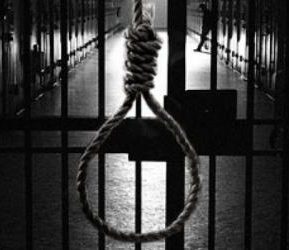
Pakistan has one of the largest death row populations in the world. This is partly because there are so many offences (over 20) for which a person may receive a death sentence including non-lethal crimes such as blasphemy, kidnapping, and drug offenses. There are around 7,595 prisoners on death row in Pakistan. Hanging is the only legal means of execution in Pakistan
Death row prisoners are held in squalid conditions with cells measuring 8 x 12 built for one, or two, people now holding six or more and confinement being up to 23 hours a day. Nutrition, sanitation, and exercise are inadequate and lack of these can lead to disease, violence, and the deaths of prisoners.
These conditions violate human rights as detailed in the International Covenant on Civil and Political Rights (ICCPR) Articles 6, 7, and 10 which protect the right to life, prohibit torture and cruel, inhuman or degrading treatment or punishment, and the right to humane treatment while incarcerated. The Federal Shariat Court of Pakistan has also recognised serious human rights violations for Pakistani prisoners and declared that only prisoner condemned by a High Court may be transferred to a death row cell.
The average prisoner on death row will spend many years awaiting execution. During this time, the conditions above can result in prisoners suffering from Death Row Syndrome which produces severe mental trauma and physical deterioration including fearfulness, anxiety, depression, self-mutilation, confusion, lethargy, and insanity. Any existing mental health conditions are exacerbated by death row.
Views: 405

Prisoners Abroad
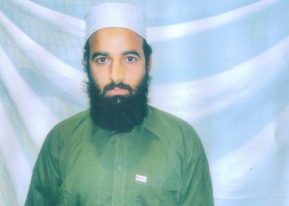
There are about 40 Pakistani citizens imprisoned at the Bagram Prison in Afghanistan without any charge or trial. They are denied the right to a legal defense, which makes them out to be the victims of a cruel detention system. Some of them have been imprisoned for more than 11 years. The only exposure they have to the outside world is through being allowed to speak to their immediate family members via Internet telephone calls. They don’t have access to the law, the media, or human rights organizations. Today these men are not much more than images on the media. Successive Pakistani governments have failed to uphold the rights of its citizens held in Bagram or help alleviate the suffering of their families in Pakistan.
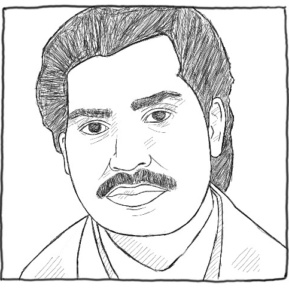
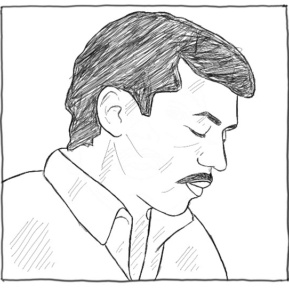
Justice Project Pakistan with the aid of photojournalist AsimRafiqui, helped brought the plight of the prisoners and their families to the public through portraits and first person testimony. These images highlight real-life repercussions of indefinite torture, which entails robbing detainees and their relatives of justice and dignity. They represent the notion that it is not only the detainees who have been kept behind bars but their entire families too.
Links to Bagram reports:
1.The Complete Report.
2.Sub-Section on Recommendations.
3. Sub-Section On Government Failures.
Views: 405
Views: 13