Muhammad Anwar – Execution Pending
Muhammad Anwar was a child involved in a scuffle that broke out after a village football game. One of the youths involved died a month later and Muhammad was accused of killing him. All other youths involved were acquitted but Muhammad was given the death penalty and has spent 18 years on death row awaiting execution.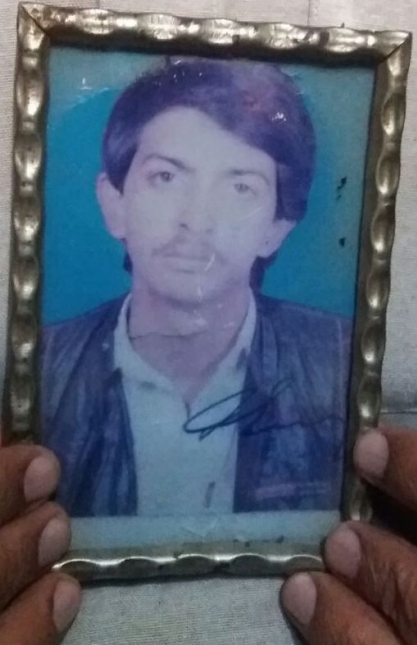
Muhammad Anwar was arrested in 1993 along with his brothers, Abdul Haq and Abdul Ghani. They had been playing football in their village one day when an argument broke out. Later that evening, 15-20 youths arrived at Muhammad’s house and a fight ensured. Three people were injured and one of the injured died approximately a month later.
The trial of the three men took over five years to conclude. During the course of the trial, the lawyer hired by Muhammad’s family passed away and he was represented at the defence stage by a court appointed lawyer who failed to cross examine the witnesses on the basis of statements recorded during the police investigations. Eventually, Abdul Haq and Abdul Ghani were acquitted but on 27 June 1998 but Muhammad was sentenced to death.
An appeal from sentence was filed in 1998 but this was dismissed in 2001. A further appeal was filed to the Supreme Court in 2002, but was dismissed in July 2007. Following this dismissal Muhammad’s family filed a criminal review petition before the Supreme Court. This petition was later withdrawn so that Muhammad’s juvenility could be considered properly.
Muhammad was born on 28 December 1975 and his birth was registered by his family with the local Union Council on 31 December. The event for which Muhammad is charged took place in March 1993 when Muhammad was 17. According to Pakistan’s Juvenile Justice System Ordinance 2000 (JJSO), a law which was designed to bring Pakistan’s juvenile justice system in line with international law and practice, Muhammad was a juvenile and the JJSO prohibits the imposition of the death penalty on anyone who was under 18 years old at the time of an offence.
In 2001, shortly after the dismissal of Muhammad’s High Court appeal, the Ministry of Interior issued a notification which aimed to ensure that any death row prisoner who had been convicted prior to the introduction of the JJSO could still receive the benefit of the new law, and would have their sentence commuted to life through the Presidential power to pardon contained in Article 45 of the Constitution.
On learning of this Notification, Muhammad’s family made numerous efforts to ensure that Muhammad received the benefit of this new law. In a letter to the Human Rights Cell of the Supreme Court, Muhammad’s mother, Hamidan Bibi, details some of the efforts made on Muhammad’s behalf. She notes that on the basis of the notification the Home Secretary Punjab requested and obtained copies of Muhammad’s birth certificate and registration documents and also ordered a medical determination to be conducted in the case. A medical board was convened at Nishter Hospital Multan on in March 2002 and concluded that he was a juvenile. But no action was taken for seven years by the Home Secretary to resolve the case and to commute Muhammad’s sentence.
The family applied time and again to the Supreme Court, Sessions Court, High Court, the Presidency, the Supreme Court Human Rights Cell, and the Ministry of Interior for consideration of Muhammad’s juvenility. Each time it was either ignored or rejected. On 12 December 2015 a death warrant was issued. A High Court judge demanded that a Sessions judge make a determination on Muhammad’s juvenility on 18 December as the execution was scheduled for 19 December. The Sessions Judge refused and dismissed the application. The High Court issued a temporary stay of execution.
Views: 112