
Briefing on Khizar Hayat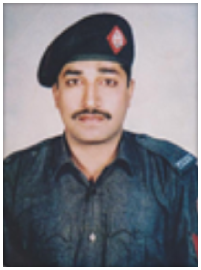
Khizar’s third execution warrant have been issued by District and Session Judge, Lahore, setting his execution date for 15th January. This will make Khizar the first Pakistani to be executed in 2019.
Khizar Hayat, a mentally ill prisoner, was sentenced to death in 2003 for fatally shooting a fellow police officer. Since then, he has spent almost 16 years on death row. During that time, Khizar’s mental illness has become progressively worse.
He was first diagnosed with paranoid schizophrenia by jail authorities in 2008. His mental health record consistently refers to his delusions, psychosis, and his mental illness, and shows that he has been prescribed powerful anti-psychotic medication.
His condition has made him the target of abuse and attacks by fellow prisoners. On one occasion, he received near-fatal head injuries severe enough to require surgery.
Since that time, Khizar lives in total isolation – the only way to protect him from other prisoners
 Loading...

 Reload document
  Open in new tab
Background
Until he was arrested, Khizar worked as a police officer in the village where he lived with his wife and children. Those who knew him described him as a kind man, but “very slow” and easily manipulated. In the months before his arrest in 2001, Khizar had fallen under the influence of a local “Pir” – a man who turned out to be a fraudster and a fake. This man convinced Khizar to sign over a large amount of land and property to him, and it was due to his influence that Khizar was eventually implicated in the murder of his friend and fellow police officer, Ghulam Ghous.
Khizar pleaded not guilty during his trial, but his lawyer failed to introduce any evidence or call a single witness in his client’s defence. Khizar was convicted and sentenced to death.
Khizer’s mental illness
Khizar’s jail medical records state that he started exhibiting “psychiatric symptoms” in February 2008, although the seeds of Khizar’s illness – paranoid schizophrenia – were sown long before that, at birth. In September of that year, his illness became so severe that he was admitted to the jail hospital for over a month. Since then, he has constantly been prescribed powerful anti-psychotic medications such as Risperidone.
During his time in jail Khizar’s condition and his delusions have become progressively worse. He believes that the world is cming to an end because the Americans landed on the moon, and the moon is now having a dire effect on the world. He believe that the solutions to the world’s problems are to be found in the toilet in his cell, through its special connection to the Earth. His mental illness is often so severe that Khizer is unable to take care of his physical condition, often dressing in filthy clothes, disrobing completely, or throwing food and faeces out of his cell.
Unfortunately for Khizar, his mental illness has caused him considerable physical as well mental suffering. Khizar’s jail records show that in 2009 he was admitted to a public hospital with severe head injuries and required an urgent operation. As the record goes on to explain, these injuries had been caused when Khizar’s cellmates – unable to cope with spending 24 hours a day cooped up in a cell with a delusional and confused individual – violently attacked him. Sadly, this incident was far from isolated, and Khizar’s lawyers frequently recorded seeing Khizar suffering from injuries during their visits, most likely sustained during similar attacks. Eventually in 2012 the attacks on Khizar became so frequent and severe that he was moved to an isolated cell in the jail hospital.
Khizar’s mother began requesting his transfer to a proper medical facility where he could receive treatment for his illness in early 2009. Neither has she delayed until the last minute. More than 14 months ago, she asked that a respected forensic psychiatrist be permitted to conduct a full scale evaluation of him – far broader than the brief reviews that are all that the jail authorities can manage. There requests have fallen on deaf ears. Instead, Khizar has spent the last 3 years alone in his cell in the hospital, effectively living in solitary confinement, despite the fact that that punishment is not permitted under Pakistani law even for the most heinous offences.
Khizar is so out of touch that he does not even know why he is in prison. He believes he is in jail due to a “driblet” clerical mistake. When his lawyers went to visit Khizar on 18th June – 2 days after he had escaped the hangman’s noose by only a matter of hours – they asked him what he thought had happened on the day when preparations were being made for his execution. Khizar explained that the jail authorities had come to take his thumb print, because they were going to acquit him. Lots of women had visited him, and they were happy, presumably because of the acquittal. He was then moved to another prison block to spend the night, while he waited for the notice of his acquittal to come through from the judge. Khizar later noted that he had been moved back to his old cell because his notice had not yet come through, but told his lawyers that he still expects his release – most likely on 6th July.
Contrary to what Khizar believes, there was no order for his release made on the 15th June. Instead, he was granted a temporary stay of execution by the Lahore High Court after his lawyers filed a petition questioning the legality of his execution in light of his severe mental illness. This petition was later dismissed after the jail authorities reported that Khizar was “somewhat oriented in time and space”, and therefore fit to be executed. Although this statement is contradicted by the wealth of medical evidence in Khizar’s case, it could nonetheless be the basis on which a new warrant for his execution is issued.
Khizar is a mentally unwell man who has already suffered years of abuse in Kot Lakhpat Jail. He belongs in a mental health facility, not strung up on the gallows in violation of international and Pakistan’s own laws.
-
- CHIEF JUSTICE SUSPENDS KHIZAR’S EXECUTION AFTER CIVIL SOCIETY, ARTISTS AND JOURNALISTS CAMPAIGN TO SAVE HIM
- PAKISTAN MUST HALT IMMINENT EXECUTION OF MENTALLY ILL PRISONER KHIZAR HAYAT
- Khizar’s Execution to be Stayed in Light of Imdad’s Pending Case
http://us3.campaign-archive1.com/?e=[UNIQID]&u=4d452280bc016abdd37a94bc6&id=83783aa112
- NATIONAL COMMISSION FOR HUMAN RIGHTS OUTRAGED AT “CARELESS” JAIL SUPERINTENDENT
http://us3.campaign-archive2.com/?e=[UNIQID]&u=4d452280bc016abdd37a94bc6&id=2f95bcdf9c
- THE OTHER IMDAD’: BLACK WARRANTS ISSUED FOR ANOTHER SCHIZOPHRENIC PRISONER
http://us3.campaign-archive1.com/?e=[UNIQID]&u=4d452280bc016abdd37a94bc6&id=cb74003764
- Hearing tomorrow on execution of mentally-ill
http://us3.campaign-archive2.com/?e=[UNIQID]&u=4d452280bc016abdd37a94bc6&id=ce945b06e4
-
- 28/03/2018
LHC seeks report on schizophrenic prisoner’s health: Dawn
JPP calls for treatment of schizophrenia death-row prisoner: The Nation
https://nation.com.pk/28-Mar-2
018/jpp-calls-for-treatment-of -schizophrenia-death-row-priso ner JPP calls for schizophrenic death row prisoner to be shifted to a mental health facility: Daily Times
- 15/06/2015
Pakistan Prepares to Execute Mentally Ill Inmate (UCA News)
http://www.ucanews.com/news/pakistan-prepares-to-execute-mentally-ill-inmate/73780
Pakistan Set to Violate International Law by Hanging a Mentally Ill Prisoner (Asia Despatch)
- 16/06/2015
Pakistani Court Suspends Mentally Ill Convict’s Execution (Yahoo News)
https://uk.news.yahoo.com/pakistani-court-suspends-mentally-ill-convicts-execution-053240254.html
Pakistan Issues Temporary Stay of Execution for ‘Mentally Ill’ Man (UCAN India)
http://www.ucanindia.in/news/pakistan-issues-temporary-stay-of-execution-for-mentally-ill-
- 23/07/2015
Mentally Ill Man to be Hanged in Pakistan’s First Post-Ramadan Executions (Common Dreams)
Pakistan: Don’t Execute Man with Mental Disability (Human Rights Watch)
https://www.hrw.org/news/2015/07/23/pakistan-dont-execute-man-mental-disability
- 24/07/2015
Black Warrants for ‘Mentally-Ill’ Convict (Dawn)
http://www.dawn.com/news/1196019
Rights Group Urges Pakistan Not to Hang Mentally Ill Man (BBC)
http://www.bbc.com/news/world-asia-33650972
Black Warrants for ‘Mentally-Ill’ Convict (News United)
http://www.newsunited.com/black-warrants-for-mentally-ill-news/17530198/
- 26/07/2015
Pakistan Court Stays Hanging of ‘Mentally Ill’ Prisoner (Times of India)
Insane Convict’s Execution Halted in Pakistan (Business Standard)
Pak Court Stays Hanging of ‘Mentally-Ill’ Prisoner (The Hindu)
http://www.thehindu.com/news/international/pak-court-stays-hanging-of-mentallyill-
Execution of ‘Mentally Ill’ Convict Stayed (Pakistan Post)
http://www.pakistanpost.pk/2015/06/execution-of-mentally-ill-convict-stayed.html
Death Sentence Stayed (The News)
https://www.thenews.com.pk/print/53003-death-sentence-stayed
- 27/07/2015
Pakistan Urged to Halt Execution of Severely Disabled Prisoner
- 29/07/2015
U.N. Rights Experts Urge Pakistan to Halt Ongoing Surge in Executions and to Reinstate Moratorium on Death Penalty (U.N. Human Rights)
http://www.ohchr.org/EN/NewsEvents/Pages/DisplayNews.aspx?NewsID=16275&LangID=E
- 08/09/2015
Hearing Tomorrow on Execution of Mentally-Ill Pakistani (Pakistan News)
http://www.pakistannews.net/index.php/sid/236507135
- 18/07/2015
Pakistan’s Hypocritical Season of Mercy (The Express Tribune)
http://tribune.com.pk/story/922757/pakistans-hypocritical-season-of-mercy/
- 23/07/2015
Executing the Mentally Ill (The Nation)
http://nation.com.pk/columns/23-Jul-2015/executing-the-mentally-ill
- 10/08/2015
Insanity Executed (Daily Times)
http://www.dailytimes.com.pk/opinion/10-Aug-2015/insanity-executed
- 15/08/2015
The Human Tragedy behind the Numbers (The Express Tribune)
http://tribune.com.pk/story/929979/death-penalty-the-human-tragedy-behind-the-numbers/
Ask Prime Minister Mr. Imran Khan to #BringItBack
Prime Minister Mr. Imran Khan, we the undersigned call on you to show mercy to the mentally ill, the physically disabled and juvenile offenders who are currently on death row. We strongly urge you to undertake action to reform our criminal justice system that continues to punish only the most vulnerable members of our society. We demand that until this is done, the Government of Pakistan reinstates the moratorium on the death penalty.
168
signatures so far!
Views: 144